The Pan Am Series – Part V: The “Nautical Airline”

An American Clipper Ship circa 1870

An American Clipper Ship circa 1870

Pan American World Airways has always been associated with the sea and things nautical.  Its aircraft were called “Clippers” and many of the Clipper names had references to the sea, particularly with the Boeing 747 aircraft, which were given names such as Pride of the Sea, Champion of the Seas, Spark of the Ocean, Belle of the Sea, Crest of the Wave and Sovereign of the Seas, to name a few.

How Pan Am became the “Nautical Airline” is centered on Pan Am’s founder, Juan Trippe who dreamed of this idea from the beginning of his venture in establishing an airline. How Pan Am was formed is a story of wheeling and dealing, mergers and acquisitions and financial and political maneuvering that is well documented in the Pan Am literature, including Robert Daley’s An American Saga – Juan Trippe and His Pan Am Empire, Marylin Bender and Selig Alyschul’s The Chosen Instrument and R.E.G. Davies’ Pan Am, An Airline and Its Aircraft.

Suffice to say, however, it is useful to have a little background.  In the beginning there were four interested groups, as identified by R.E.G. Davies in Pan Am, An Airline and Its Aircraft. The first group, the Montgomery Group, formed Pan American Airways, Inc. (PAA).  It was founded on 14 March 1927 by Air Force Majors “Hap” Arnold, Carl Spaatz and John H. Jouett, later joined by John K. Montgomery and Richard B. Bevier, as a counterbalance to German-owned carrier “SCADTA” (Colombo-German Aerial Transport Co) that had been operating in Colombia since 1920. SCADTA was viewed as a possible German aerial threat to the Panama Canal.  Eventually Montgomery petitioned the US government to call for bids on an U.S. airmail contract between Key West and Havana (FAM 4) and won the contract.  However, PAA lacked any aircraft to perform the job and did not have landing rights in Cuba.  Under the terms of the contract, PAA had to be flying by 19 October 1927.

On 2 June 1927, Juan Trippe formed the Aviation Corporation of America (ACA) (the Trippe Group) with financially powerful and politically well-connected backing, and raised $300,000.  On 1 July Reed Chambers and financier Richard Hoyt (the Chambers-Hoyt Group) formed Southeastern Airlines.   On 8 July Trippe formed Southern Airlines and on 11 October Southeastern was reincorporated as Atlantic, Gulf and Caribbean Airways.  Trippe then proposed a merger between these three groups and in doing so played a trump card:  He and John A. Hambleton, one of his backers, traveled to Cuba and persuaded the Cuban president to grant landing rights to the Aviation Corporation, making Montgomery’s mail contract useless as a bargaining chip.  After much wrangling between the groups, including a meeting on Hoyt’s yacht during which Assistant Postmaster General Irving Grover threatened that if there was no deal he would not be awarding any contract to anyone, the Aviation Corporation of the Americas was formed, operating as Pan American Airways, headed by Juan Trippe.  Later the corporation’s name was changed to Pan American Airways.

The deadline of 19 October still loomed, however. A Fokker F-VII aircraft was selected for the operation, but could not be used because Meacham’s Field in Key West was not completed and could not accommodate the aircraft. What transpired was an eleventh hour miracle. Pan American’s representative in Miami learned that a Fairchild FC-2 monoplane was in Key West, sitting out a hurricane threat.  The aircraft was owned by West Indian Aerial Express (the Fairchild Group) and a deal was made to charter the aircraft.  The pilot was offered $145.50 to carry mail to Havana that had just arrived on the Florida East Coast-Atlantic Coast Line railroads.  The hurricane threat disappeared and the trip was made.  The rest is history.

On 28 October 1927, the Fokker left Key West on Pan American’s inaugural international flight, carrying 772 lb of mail. On 16 January 1928, the first passenger flight was completed on the same route.  And on 28 October 1928, Pan American established its Miami base at Dinner Key.

The First Clipper

In 1931, Pan Am acquired the Sikorsky S-40, the first aircraft that would be designated “Clipper”.  This designation came about as a result of Trippe’s fascination with ships and the sea.  As a child he had traveled to Europe on Cunard Line ships and this fascination transcended to the idea that Pan Am should be a kind of nautical airline.

RMS Mauretania, a Cunard ship that Juan Trippe might have traveled on to Europe

RMS Mauretania, a Cunard liner that Juan Trippe might have traveled on to Europe.

Along these lines, a maritime culture emerged.  Andre Priester, who Trippe had previously hired as chief engineer, dressed the pilots as naval officers with gold wings pinned to their breast pockets.  Gold stripes were on the jacket sleeves to show rank.  The pilots also wore peaked hats with white covers and a gold strap.  And, according to Robert Daley in An American Saga, Priester “forbade [the pilots] to stuff or twist these caps into the dashing, high-peaked shapes so dear to most aviators’ hearts.”  These naval trappings according to Marylin Bender and Selig Altschul in The Chosen Instrument “served to set distance between the airline and aviation’s all too proximate history symbolized by the khaki breeches, leather puttees, jacket and helmet of the daredevil flyer.  [Pan Am’s] pilots were invested as engineers to whom flying was a scientific business rather than a  thrilling escapade.”  Pilots underwent a stringent and comprehensive training program and, according to former flying boat and retired captain Bill Nash, were required to have college degrees prior to hiring and to demonstrate proven proficiency prior to promotion in the flight deck.  Nash started as a Fourth Officer before rising to Captain.

Sikorsky S-40 - "Southern Clipper" - the first Clipper Ship

Sikorsky S-40 – Pictured is the Southern Clipper

When the S-40 made its debut, it was the largest airplane built in the United States.  Its maiden voyage on 19 November 1931 was from Miami to the Canal Zone carrying 32 passengers with Charles Lindbergh at the controls and Basil Rowe (formerly with the West Indian Aerial Express) as co-pilot.  Igor Sikorsky, who Trippe had earlier brought on board to design an aircraft to Pan Am’s own specifications (the predecessor to the S-40, the S-38) also had some time at the controls.

Trippe named the aircraft the American Clipper.  Perhaps inspired by prints of American clipper ships hanging in his home or reaching back to his Maryland ancestry from where these swift sailing ships originated in the shipyards of Baltimore, it was, according to Bender and Altschul “appropriate then, to call the first transport ship designed for international air commerce after those magnificent vessels.”  Thereafter, all Pan Am aircraft were to be designated Clippers.

Clipper Pride of the Ocean at London Heathrow

Clipper Pride of the Ocean at London Heathrow Airport

Clipper Dashing Wave at Buenos Aires Ezeiza Airport

Clipper Dashing Wave at Buenos Aires Ezeiza Airport

The operation would be in keeping with maritime lore and custom.  The pilot was called “captain” and the co-pilot “first officer”.  The title “captain” implied master of the ship or chief executive of the flying boat.  Speed was calculated in knots (nautical miles per hour), time in bells, and a crew’s tour of duty was a “watch”.  In the cabin, according to Daley, “walls and ceilings would be finished in walnut painted in a dark stain, and the fifty passengers would sit in Queen Anne chairs upholstered in blue and orange. The carpet would be blue, and the windows equipped with rope blinds.  As aboard any ship, life rings would hang from the walls of the lounge.”  The stewards, according to Bender and Altschul, “were modeled in function and appearance after the personnel of luxury ocean liners.  Their uniforms were black trousers and white waist-length jackets over white shirts and black neckties. Stewards distributed remedies for airsickness, served refreshments (and in the S-40, prepared hot meals in the galley of the aircraft), pointed out scenic attractions from the windows of the plane and assisted with the red tape of Customs and landing procedures.”

This nautical approach seemed to carry on through the entire existence of Pan Am.  The flight deck – bridge – was always on the top deck, as on an ocean liner.  This was evident in the flying boats, including the Martin M-130, the China Clipper, the Boeing 314, the Boeing 377 Stratocruiser and the Boeing 747, with its flight deck on the upper deck of the aircraft.

M-130 - China Clipper

M-130 – China Clipper

Boeing 314

Boeing 314

Boeing 377

Boeing 377

The flight deck of the Boeing 314 had the appearance of the bridge of a merchant ship:

The "Bridge" of the Boeing 314

The “Bridge” of the Boeing 314

Note the Clipper ship on the forward bulkhead of the Boeing 707:

Interior of Boeing 707 in All-Economy Charter Configuration.

Interior of Boeing 707 in All-Economy Charter Configuration.

Below, the SS United States and the bridge of a large merchant ship:

SS United States  (photo credit Charles Anderson)

SS United States
(photo credit Charles Anderson)

Bridge of a Roll On/Roll Off merchant ship.

Bridge of a Roll On/Roll Off merchant ship.

The “nautical” feel was also prevalent at Clipper departures, particularly from Dinner Key in Miami during the early years and Pan Am’s Worldport at New York’s John F. Kennedy International Airport in the later years.  There was an atmosphere similar to the departure of an ocean liner, with festivity, sense of adventure and anticipation of a voyage to a distant place.  The setting at the Worldport, particularly with the evening departures to distant destinations, included passengers and well-wishers gathered at the gate in sight of the Clipper being readied for the long voyage ahead.  There was a sense of drama; the type of drama that Juan Trippe probably envisaged for each Clipper departure.  The romance of traveling to faraway places was part and parcel of the Pan Am experience.

The nautical element was also featured in many of Pan Am’s printed brochures and posters, as well as on the cover of an annual report.

1958 Annual Report

1958 Annual Report

However, as the years passed, the romance of the “nautical airline” began to wear out.  Perhaps Pan Am tried to preserve it with the Boeing 747, but times had changed.  The grand ocean liners were soon replaced by cruise ships where passengers were more interested in the on-board entertainment rather than the peaceful environment of the sea (although that can still be experienced on cargo ships).  Airline passengers became more interested in getting from A to B at the lowest fare, rather than experiencing the ambiance of a flying ocean liner.  Airplanes became more like buses, with the exception of the premium cabins, rather than airships commanding the airways. And the bridge, both on many cruise ships and on the largest passenger aircraft in the world, would no longer be on the topmost deck. The sense of command of the airways and the sea has seemed to disappear, and the bridge, “formerly sacrosanct navigational preserves”, as eloquently described by John Maxtone-Graham in Liners to the Sun,  is now simply a functionary in the process of getting passengers from A to B, or in the case of a cruise ship, from A to A via port visits.

On the A-380, the flight deck is located between the main and upper decks:

A-380 - Note location flight deck compared to Boeing 747

A-380 – Note location of the flight deck compared to Boeing 747, pictured above.

And on the newer cruise liners, the bridge is not on the highest deck, as shown here on the Holland America Line’s Eurodam.

MS Eurodam - Note the location of the bridge four decks below the top deck.

MS Eurodam – Note the location of the bridge four decks below the top deck.

Perhaps Pan Am the Nautical Airline was overcome by its own success.  One cannot, however, deny that the idea of a nautical airline was a necessary step in the process of shrinking the globe.  Now, with today’s technology, it probably is no longer needed.  Happily, one tradition of the nautical airline continues:  the Pilot-in-Command of an airliner is still the “Captain”.

To learn more about the history of this pioneering airline, click on the title below for preview of

Pan American World Airways – Images of a Great Airline Second Edition

This book is available on eBay .

Another excellent book is Pan Am – Personal Tributes to a Global Aviation Pioneer, which was published to commemorate the 90th Anniversary of Pan Am’s founding. It contains more than 80 stories written by former Pan Am employees and international media friends who had personal experience with many of Pan Am’s key events during its history. It is the perfect companion to Pan American World Airways – Images of a Great Airline Second Edition and can be purchased on Amazon.

Preview Pan American World Airways – Aviation History Through the Words of its People, which is available on Amazon.

For further information about the history of Pan American World Airways, visit: Pan Am Historical Foundation

The Story of Snow Leopard – Part Three: The Inaugural Flight

Snow Leopard-ground

Part Three:  The Inaugural Flight

Selling Tickets

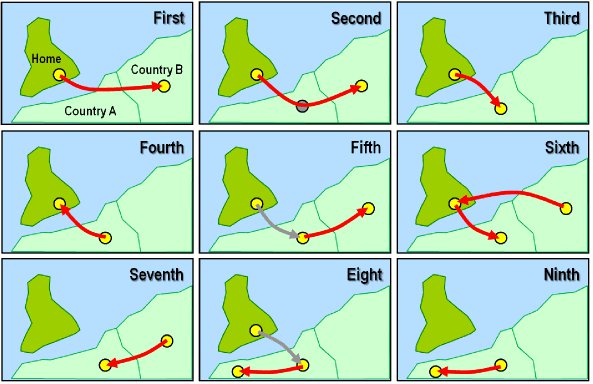
With the Acceptance Flight completed and the aircraft ready to start operations, management and staff got into full gear. Tickets were sold, crews scheduled and plans were made for launch activities.  At the London Headquarters on Kensington High Street, tickets sales in both the Delhi, India and Karachi, Pakistan markets was brisk and flights sold out very quickly. However, ticket sales in the Dushanbe market was slow due to very little western business activity in the country, and what little passenger traffic there was, was largely government in nature. Thus, selling seats in the beyond markets was necessary.  As described in Part One, this “Sixth Freedom” operation enabled a profit on what would have been money losing flights.  In fact, over 90-95% of the booked passengers were booked on flights to Delhi or Karachi.  Deeply discounted advance purchase excursion tickets offered through local travel agents in the ethnic neighborhoods of London resulted in a huge response.

The Kensington High Street Headquarters served as both a ticket office and operations base with constant activity, day and night.  This was punctuated with welcome and frequent visits by the Pan Am and Tajik flight crews.

McMillan House-1 Cyrus and Eni

   McMillan House-6 Amin   McMillan House-4

Ticket Sales at Kensington High Street Office

McMillan House-3

Tajik Staff

McMillan House-2    McMillan House-7 Pilot

Pan Am Flight Crews visiting Kensington High Street Headquarters

Cabin Crew Scheduling

While ticket sales and preparations for the inaugural flight were progressing, Gunilla Crawford and her team of flight attendants set about to organize crew scheduling and rotations.  This was no easy task!

Cabin crew scheduling was a challenge for Gunilla.  With no computers available, some creativity was required:

From Gunilla Crawford:

“We went across the street from the hotel to a gas station and bought four dinosaur-shaped erasers in four different colors.  Each dinosaur represented a crew.   And each crew consisted of two ex-Pan Am flight attendants and the rest Tajik.  On a large poster board we plotted the four destinations, London, Dushanbe, Karachi and New Delhi.  By moving the dinosaurs between the destinations we made sure nobody was scheduled from London, when in fact the crew member was in New Delhi!”

Cabin Crew Sked-2   Cabin Crew Sked-3

Cabin Crew Scheduling.   In the left picture are Gunilla Crawford, Vince Rossi and Debbie Thornburg.  In the right are Gunilla, Linda Morehouse and Vince.  Note the colored dinosaurs!

From Vince Rossi, who worked on crew scheduling:

“Gunilla was responsible for the entire inflight programme. To that end, building and scheduling crews was an important component of her job. Four crews were required to staff the operation, with one or two crews on rotation back home. Each flight would be staffed with two Pan Am Pursers joined in the SP cabin by flight attendants from India for Hindi language as well as the wonderful Tajiks. Some Brazilian and French flight attendants who lived in London also joined.

“For aircraft plotting, crew staffing, scheduling and rest requirements, in the days before laptop computers with Excel spreadsheets, improvisation was needed. A long sheet of plotting paper was procured, along with 4 small rubber toy dinosaurs. Each dinosaur was numbered in pencil: crew/dinosaur 1, crew/dinosaur 2, etc…. An interpretation of a full week of aircraft movements and stations visited was marked on the plotting paper, with lines drawn as the days progressed marking the track of the aircraft from Heathrow through Dushanbe and on to Delhi or Karachi. When Gunilla said it was time to “run the dinosaurs”, we placed the numbered dinosaurs on the plotting paper, each one numbered and representing a crew at their respective locations across the system and ensured that legal rest requirements were met and staffing matched the projected aircraft movements. This method was used for the entire time of the operation.

“Often the dinosaurs were “run” on a coffee table in a dedicated crew lounge provided at our hotel on Bath Road near Heathrow, and crews from other carriers in the lounge would be amused watching the “run of dinosaurs.  This system worked exceptionally well. No aircraft movement was impeded due to cabin staffing or crew rest issues for the entire operation. It is also important to note that the initial “pairings” were established in meetings with the Tajik crewmembers, who also had an idea of how they wanted their work patterns and layover times and points. I may be mistaken but India and Pakistan were potential visa issues for the Tajiks even for layovers.”

 and . . . Catering

When Gunilla arrived in London, she was in for a surprise.  In addition to heading up the cabin crew, there was another responsibility as well:  Catering.  She handled that in pure Pan Am fashion.

“We made appointments with Catering at Heathrow airport, we picked china for the First Class Service, silver ware, serving dishes, baskets and linens. The “old” Pan Am training came back in force and we would do the service in the name of that classic carrier.” 

The food service to be offered was superb.

In First Class departing London, “Royal Doulton Service” included during the drinks service a choice of Hot Canapes including Chicken Kebab, Mushroom Cream Vol-au-Vent, Spring Roll, Basil Cashew Parmesan Tartlets and Asian Canapes of mixed pakoras and samosas. The Hors d’oeuvres offered a choice of Poached Salmon Medallion on Oakleaf lettuce with Diced Pepper and Cucumber Salad, or a Tomato Cup filled with Mayonnaise Lemon garnish or a Smoked Chicked Breast on Radicchio with Mandarin Orange and Cucumber or a Radish and Mixed Peppers Julienne, all with a Mixed Leaf Salad with Vinaigrette.  For the entree, the choices were Curry Prawn Jalfrezi with fresh chopped Coriander, Rack of Lamb with Herbs and Fresh Rosemary Sprigs or Chicken Shirin Polo accompanied by Basmati Rice with Zereshk or Potato Sesame Croquettes and a choice of vegetables including Broccoli au Gratin Mornay or Steamed Mixed Vegetables with Baby Sweetcorn, Turned Carrots and Mange Tout.

For desert  Gateau Chocolate Roulade with Orange Zest was followed by a cheese plate that included Camembert, Port Salut, Feta, Stilton, Brie with black grapes, black and green olives and celery batons.  Ending the meal was a fresh fruit basket.

Prior to landing in Dushanbe the pre-arrival “hot breakfast was just as posh…It was like working the Pan Am Clippers again”, according to Vince Rossi one of the ex-Pan Am flight attendants.

The Inaugural Flight

As the day approached for Snow Leopard’s first revenue flight from London to Dushanbe and onwards to Karachi, the crews began assembling in London to prepare.  For Gunilla, it was a happy reunion with the Tajik flight attendants who greeted their ex-Pan Am counterparts with “squeals and shouts of joy”.  For the inaugural flight four ex-Pan Am were to work the flight, Robert Stewart, Tania Anderson, Linda Morehouse and Linda Oja.  On the flight deck were Captain Ed Olasz, First Officer Jim Donahue and Flight Engineer Carl Meixal.  In addition, two qualified captains were assigned to the flight.

Preparations for departure went into high gear.  Nothing was overlooked.  Everything was covered, from the accuracy of the manuals to training to CRM (crew resources management) with the Tajik flight attendants.   Anything that could possibly happen, even the unpredictable, was discussed and thoroughly prepared for.

The excitement of flying again did not escape the ex-Pan Amers who were taking part in the operation.  Snow Leopard’s first flight coincided almost to the date of the demise of their beloved Pan Am, some two years prior.

From Tania Anderson:

“I happily scribbled away in my diary, gushing about the thrill of flying with my cosmopolitan colleagues again. A few fondly remembered having flown with this particular 747SP before. Some of my co-workers had not flown since Pan Am’s demise. It had been nearly two years to the day that I had been on my last flight, a White House Press Charter, when we learned that we were bankrupt for good. Now as we gathered in the lobby of our London hotel for the first flight to Dushanbe, we all noted the sad anniversary coupled with the excitement of exploring a new airline together.”

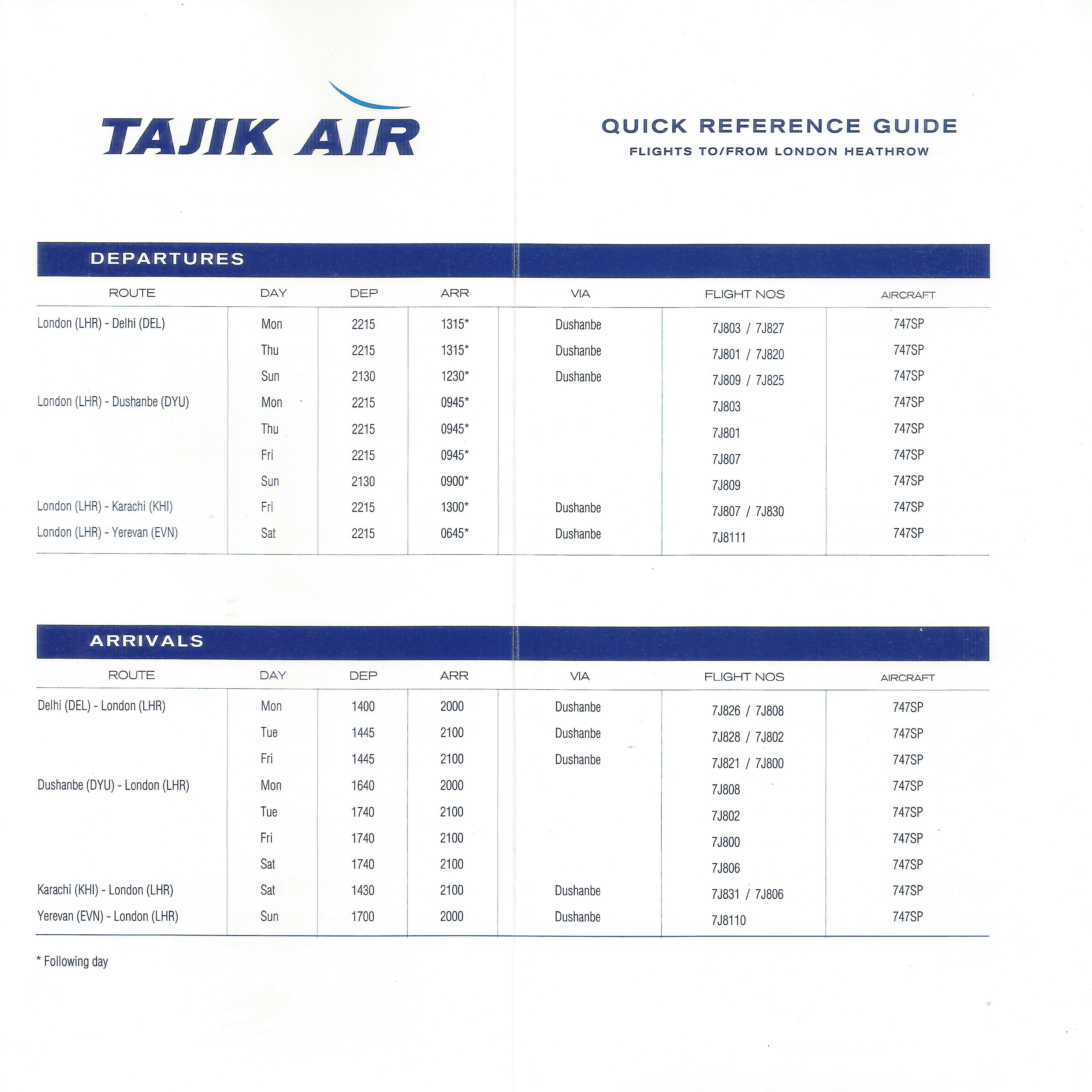
At 2215 hrs on the date of the inaugural flight, Snow Leopard, designated 7J801, departed London Heathrow for Dushanbe. The spirit on board was one of joy and happiness.

From Tania Anderson:

“During the flight, I quickly noted that many of the passengers, who were going onto Karachi, were much less frenetic than the ones we used to fly on Pan Am. They were elated to be going home, either for a visit or permanently, for a reasonably priced airline ticket. One passenger actually asked if he could kiss me, and I reluctantly replied, “Well, Ok, but on my cheek!” I also noted in my diary that we were flying across Russian airspace which may not sound like a big deal but to someone who grew up during the Cold War when the former USSR was our mortal enemy, it was intriguing to me.

“The multi-national crew also bonded quickly. The Tajik flight attendants loved the fact that my name was Tania. Naturally assuming that I was Russian with a name like Tania, one actually commented that I spoke good fluent English for a Russian. Some of the Tajiks were dark with olive skin and Middle Eastern looks. Most were Muslim. Others were the opposite end of the spectrum with white skin and light eyes. They were usually Russian Orthodox.

“Among the Tajik flight attendants, there were three Irenas on the flight.  Any time I said ‘Irena’, all three would whirl around simultaneously to see what I wanted.  The Tajik flight attendants  were absolutely delightful and so easy to get along with. They were also thrilled to have secured a job such as this with the opportunity to explore a bit of the world, especially London. Many of them had no transportation from their homes, so they simply walked miles to the airport to work these extraordinarily long flights. They went out of their way to tell us how their country was still in a lot of upheaval economically. In addition, Afghani insurgents were coming over the border to make trouble, and they wanted none of it. ‘Tania, we just all want peace and to be able to live our lives’, one told me.”

Cabin Crew-1

Crew-1   Upper deck SP from Vince

Cabin Crew-2a   Cabin Crew-1a

The Pan Am and Tajik Flight Crews

After a long flight into the night, Snow Leopard landed in Dushanbe.

From Tania Anderson:

“It was a cold, wintry, snowy day when we landed in Dushanbe to a zealous reception on the tarmac. After all, we were the first western aircraft to ever land in somewhat remote Tajikistan. I distinctly remember applause in the cabin upon our touchdown, but the local hoopla outside just about had me abandoning my jump-seat.

“With a dramatic back drop of steep snow-encrusted mountains, dozens of well-wishers had gathered on the tarmac in their traditional brightly-colored clothes. There was a band playing Russian instruments complete with long-nosed horns and big drums. Tajik national TV was there with their ancient equipment to record every single minute of the ceremonies and our arrival.”

DYU Reception-2  DYU Reception-1

The Reception at Dushanbe Airport

From Tania Anderson:

“Once on the blocks, the ground people enthusiastically boarded the plane, not only to welcome us, but to ask for a quick tour of the 747SP. Descending the spiral staircase, our pilots were given handsome home-made colorful robes to wear over their uniforms. Now that the door was open, I could observe the entire scene. Our pilots were quickly ushered down the stairs and off to the terminal for a reception including some local culinary treats whose identity was left to the imagination. Later one of them told me that the Tajiks had insisted that they shoot some vodka—maybe local moonshine—to celebrate the day. A bit horrified, our pilots made certain that the officials knew we still had another leg to fly to Karachi, but the general response was like, ‘So what?’

“Linda Oja and I stayed on the plane watching everything from L-1. Then something happened I shall never forget. As Linda squealed, ‘Oh, No!’ I saw some Tajiks dragging a sheep across the tarmac towards the Snow Leopard. It struggled the entire way, right up to the staircase, just as if it knew something lousy was about to occur. As they do in many countries, they sacrificed the sheep at the bottom of our stairs, directing the blood from his neck into a bowl. In the west we christen ships and airplanes with champagne, but now we were half way around the world in a land with customs very different than our own.

“Not long afterwards, the entire crew along with the ground people gathered in front of the aircraft for a memorable photo. Each of us was festooned with garlands of deep red-colored roses. They were velvet to the touch and their fragrance was heavenly, even against the cold blast of mid-winter.”

Crew and Ground Staff in front of Snow Leopard after arrival

Crew and Ground Staff in front of Snow Leopard after arrival.

From Tania Anderson:

“Standing there on that frosty winter day, I felt a true sense of pride about our latest “operation.” In true Pan Am fashion, we had pulled ourselves up after the bankruptcy and were on the other side of the planet helping the struggling Tajiks with their burgeoning airline, begun with one beautiful 747SP.

“Flying on the Snow Leopard was another wonderful Pan Amigo adventure to add to my memoirs.”

When Snow Leopard arrived at Dushanbe that wintery morning, Tajikistan was in the midst of an economic crisis along with a civil war.  Bread was being rationed but at the same time the country was trying to turn the page into a new chapter of their existence, emerging from the era of Soviet rule to an independent and free nation.  The arrival of this beautiful 747SP representing their national airline stoked both great pride and happiness among its citizens.
The story of Snow Leopard continues In the next and final part of this story, with exciting adventures for the Pan Am and Tajik crews and the sad end of the operation.

The Pan Am Series – Part IV: The Karachi Hijacking

747-2

Pan Am Flight 73, a Boeing 747-121, N656PA, Clipper Empress of the Seas, was hijacked on 5 September 1986 while on the ground at Karachi, Pakistan (“KHI”) by four armed men of the Abu Nidal Organization. The aircraft, with 360 passengers on board, had just arrived from Mumbai, India, and was preparing to depart for Frankfurt and continuing on to New York.

The incident began as passengers boarded the aircraft.  The four hijackers were dressed as Karachi airport security guards and were armed with assault rifles, pistols, grenades and plastic explosive belts. At about 6:00 a.m., the hijackers drove a van that had been modified to look like an airport security vehicle through a security checkpoint up to one of the boarding stairways to aircraft.  The hijackers stormed up the stairways into the plane, fired shots from an automatic weapon, and seized control of the aircraft. Flight attendants were able to alert the cockpit crew using intercom, allowing the pilot, co-pilot and flight engineer to escape through an overhead hatch in the cockpit, effectively grounding the aircraft.

During the following 16 hours, Zayd Hassan Safarini, the Jordanian leader of the hijackers, demanded the return of the flight crew to fly the aircraft to Larnaca, Cyprus, where he wanted to secure the release of Palestinian prisoners being detained in Cyprus. During negotiations between Safarini and Pakistani authorities, Safarini threatened to kill all passengers. Four hours into the hijacking, one of the passengers was shot and pushed out the door onto the tarmac below. As nightfall arrived, the hijackers herded the passengers and crew members into the center section of the aircraft. The four hijackers opened fire on the passengers and crew, and threw grenades among them, killing almost 20. Most of the survivors escaped through two doors of the plane which were forced open when the firing began.

55-Empress of the Seas   747-3

Pan Am Captain Hart Langer was in Hamburg at the time of the hijacking and received word that the hijackers were demanding a crew to fly them anywhere they wanted to go.  Below are his recollections of what happened in excerpts from his essay “Karachi Hijacking – Rescuing a 747” in the book Pan American World Airways – Aviation History Through the Words of its People, published by BlueWaterPress.

” * * *  A 747 without a crew was useless to the hijackers, and they demanded that Pan Am provide an Arabic-speaking crew to fly them where they wanted to go.  Captain Jim Duncan (System Chief Pilot), through his contacts in IATA, called Captain Jazza Ghanem, the Vice-President of Flight Operations at Saudia (Saudi Arabian Airlines) to see if they could help out.  Captain Ghanem was willing, but unfortunately was overruled by top management at Saudia.

“As a result, the consensus at System Operations Control at JFK (New York), was that if Pan Am could find a volunteer crew, negotiations with the hijackers would hopefully get them to release all of the passengers in return for flying them to some other location.  Captain Duncan wanted to know if Captain Ed Cywinski and I could head to Karachi and fly the 747 to wherever the hijackers wanted to go, in return for releasing all 390 passengers.  We agreed.  Bob Huettl, a check Flight Engineer who was laying over in LHR (London), also volunteered. * * *

“As it turned out, the APU (Auxiliary Propulsion Unit) that was supplying electrical power to the 747 in KHI had a small oil leak, and the Tech Center at JFK had predicted exactly when it would shut itself down and stop providing power to the 747.  When it finally happened, the airplane went dark, and the hijackers thought that they were under attack.   They herded all the passengers into the overwing area, began shooting people at random, and set off numerous explosive devices.  At that point, the Pakistani army did indeed attack the airplane and finally overpowered the hijackers.

“All of this happened while we were en route to KHI.  Captain Duncan was able to get in touch with the Swissair DC-10 using a phone patch and HF radio, and informed us that the hijackers had been arrested.   When we arrived, we had a chance to inspect the airplane.  The carnage was unbelievable * * *   Pan Am dispatched a crack team of mechanics from LHR to KHI, and in five days they had the airplane in a flyable condition – which is remarkable considering that there were fifty-seven bullet holes in the fuselage.   Ed, Bob, and I flew the airplane back to JFK with a fuel stop in Frankfurt.  * * * “

In a related story, former Pan Am flight attendant Liz Morris tells about her volunteer work on Pan Am’s Care Team after the Karachi hijacking to assist families from that flight.   In her story, excerpted below, also from Pan American World Airways – Aviation History Through the Words of its People, she tells about a special passenger she cared for who was on the Clipper when it was hijacked:

“At that time – before Federal law required airlines to establish Care Teams to assist families and survivors of crashes and other disasters — Pan American used a one-on-one process to assist such survivors.  I was selected as one of 50-100 volunteers to meet the Boeing 747-121 upon its arrival with some 300 survivors at John F. Kennedy Airport, New York.  We were instructed to stay with our designated passenger or family and do everything possible to assist them with ground transportation, telephone communications, re-bookings, etc. (All immigration formalities had been attended to, via passenger listings, before the aircraft’s arrival, we learned.)

“I was first in the line to receive my special passenger or family – perhaps because of my 20-year seniority and/or because I worked in Special Services, which dealt with such situations.  I assumed I would be assigned the first passenger out of First Class – a celebrity or VIP of some kind.  Imagine my surprise when, as we lined up in the large and spacious JFK arrival hall to greet the traumatized passengers of Flight 73, I suddenly saw a skinny young  Pakistani teenager break from the oncoming crowd and run toward me shouting “Mrs. Morris, Mrs. Morris…”   * * *

“As he approached me, I recognized him.  Through several preceding years he had come to my office as the unaccompanied minor VIP son of an influential Pakistani family.  The first time he was brought to me he was a sad little boy weeping profusely.  * * *

“Now, on that fateful September day 25 years ago, as the young man ran up to me – still small and slender – I immediately recognized him as my young friend but couldn’t comprehend that he had been on Pan Am Flight 73.”

Bill Lange, then General Manager of Pan Am System Control, was also involved in this event from the Emergency Command Center in New York.  Here are his recollections:

“At the time, I was Gen Mgr of Pan Am System Control and thus ran the Emergency Command Center (NYCOZPA) dealing with this flight.  I well remember Hart Langer and Ed Cywinski agreeing to go to Karachi to fly the aircraft out with the hijackers if that became necessary, a decision on their part that cements them in my mind as the bravest people I’ve ever personally known.  They were, in fact, both in New York and I believe we got them last minute seats on as Swissair flight to Zurich with a connection from there to Karachi, although my memory on the particular flights involved may be fuzzy. 

“With the Command Center up and running, we were tied into the US Government Emergency Operations Center in Washington and also with Pan Am stations throughout the region.  We also had a direct link to Karachi via an open phone link into the Lufthansa (I think) station manager’s office because that office had windows overlooking the aircraft on the tarmac.  We were in direct connection through that office though the entire event and got the word first hand when the APU died and the aircraft went dark, leading to the explosions and shooting onboard.  During the hours of stand-off, Pan Am station and operating management were dispatched to each of a large number of airports around the region that we thought the hijackers, if they ever got airborne, might choose as a destination.  We also were back and forth with the US State Department and Military at the US Government Emergency Operations Center, providing information that was to be used to prepare a Delta Force team if the decision was made to try and free the hostages.

“It was a long night and next day at JFK and many pieces of it remain in my head in only fuzzy fashion, but one part that I do remember was after the aircraft was retaken and as the passengers were being given treatment and otherwise helped, we arranged the flight of two Pan Am 747 aircraft into Karachi to bring the passengers and crew members back to the US via Frankfurt.  During the Frankfurt stop, the badly injured passengers and crew were brought to the US military hospital there for treatment.  As these flights were being prepared and boarding priorities were being established, I took a call over the US government connection from the head of the FBI team that was just starting to investigate the who, what, why and how of the hijacking.  The first words out of his mouth were about how the FBI was commandeering the upper deck lounges on both aircraft and how their teams planned to board both aircraft in Frankfurt and use the lounge to conduct interviews of all of the passengers and PA 73 crewmembers on both flights during their passage back to the US.  He wanted names and details and directed that Pan Am set up interview schedules for everyone interviews and, essentially, provide staff service to the FBI throughout the flights.  I quickly said no, that the passengers had been through serious trauma and anguish and we were not going to add to that as we brought them home.  Further, the well-being of those passengers was the first and only priority of the Pan Am staff on those aircraft.  The conversation then through several stages of increasing noise and argument leading to my final phone statement that Pan Am would prevent the FBI agents from even getting either of the flights to pester our passengers and that they (the FBI) could meet with the passengers after we had brought them safely to the US – upon saying which, I hung up the phone.  In the end, no FBI interviews took place onboard, although we did tell passengers of the FBI interest in speaking to them and helped some volunteering passengers to meet with the FAA at a JFK hotel after their arrival.  I must admit to worrying for some time after PA73 whether I had that night put myself on an FBI list somewhere for special treatment should I ever happen to stumble in their direction.

“In the aftermath, there was great concern about the ongoing state of mind of Pan Am crews throughout the system on the new risks of hijacking.  Karachi was possibly the first time that a hijacking raised the possibility of crews and passengers finding themselves on a death flight – something that became all too real on 9/11.  Pan Am thus developed a campaign presenting all Pam Am crews with a detailed story of what the company had done to support the crews taken at Karachi.  A centerpiece of that was a 30-minute video-taped reenactment of the actions taken  at NYCOZ at JFK during the event, narrated various by me, Jim Duncan and Hart Langer.  I still have that tape on a shelf in what my wife calls my personal Pan Am Memorial Shrine, aka my basement office.

“I’m sure that everyone involved in aviation has a host of stories that they could tell about their experiences, but I will always take particular pride in my 19 years at Pan Am and the stories that members of the Pan Am family relate when they get together.  To me, Pan Am was a truly special place and time populated by special people doing amazing things.”

To learn more about the history of this pioneering airline, click on the title below for preview of

Pan American World Airways – Images of a Great Airline Second Edition

This book is available on eBay .

Another excellent book is Pan Am – Personal Tributes to a Global Aviation Pioneer, which was published to commemorate the 90th Anniversary of Pan Am’s founding. It contains more than 80 stories written by former Pan Am employees and international media friends who had personal experience with many of Pan Am’s key events during its history. It is the perfect companion to Pan American World Airways – Images of a Great Airline Second Edition and can be purchased on Amazon.

Preview Pan American World Airways – Aviation History Through the Words of its People, which is available on Amazon.

For further information about the history of Pan American World Airways, visit: Pan Am Historical Foundation

The Pan Am Series – Part III: The Cairo Hijacking

Remains of hijacked Pan Am Flight 93, N752PA "Clipper Fortune" a Boeing 747 after being blown up at Cairo.

Remains of hijacked Pan Am Flight 93, N752PA “Clipper Fortune” a Boeing 747 after being blown up at Cairo.

On 6 September 1970, Pan Am’s flight 93, a Boeing 747, departed Brussels for New York via Amsterdam.  The flight never made it to New York.

During the flight’s stopover in Amsterdam, four members of the Popular Front for the Liberation of Palestine (“PFLP”) attempted to board an El Al flight, a Boeing 707 bound for New York.  Two got through but the other two were denied by Israeli security. These two then purchased First Class tickets on flight 93.

On the same day in Frankfurt, another group of PFLP members boarded TWA Flight 741, a Boeing 707 bound for New York; and in Zurich, members also boarded a Swissair DC-8 bound to New York as well. The Pan Am, TWA and Swissair flights were hijacked.  An attempt to hijack the El Al flight was foiled by the crew and a sky marshal. The TWA and Swissair flights were flown to and eventually landed at the PFLP’s “Revolutionary Airport” at Dawson’s Field, a remote desert airstrip in Jordan, formerly a British Royal Air Force base. The Pan Am flight was flown to Beirut, where it refueled and took on board additional PFLP members. The aircraft then flew on to Cairo instead of Dawson’s Field, because the Jordan airfield was considered too small to accommodate a 747.

On 9 September, a BOAC (now British Airways) VC-10 bound for London was hijacked after it departed from Bahrain and was taken to Dawson’s Field.

This became known as the “Dawson’s Field Hijacking”.

800px-Dawsonfieldcamels

The “Revolutionary Airport” at Dawson’s Field

The BOAC, TWA and Swissair aircraft were blown up on September 12, 1970 (below).

Dawson's_Field blowing up on Sep 12

The Pan Am aircraft, upon arrival in Cairo, was blown up almost immediately.  The late John Ferruggio was the In-Flight Director, and having been told the 747 would be blown up within eight minutes after landing, led his cabin crew team in the evacuation of 136 passengers and 17 crew-members.  Everyone survived.

Nellie Beckhans was a flight attendant on that trip, her first in Europe after years working Pan Am’s Central and South America routes.  Below are excerpts from her story about this event that appears in the book Pan American World Airways – Aviation History Through the Words of its People, published by BlueWaterPress.

From Nellie Beckhans:

“* * * We picked up passengers in Amsterdam.  Now it was time to go home.  On taxiing to the runway the plane stopped.  A few minutes later I heard a commotion in the First Class section.  From my assigned position at R3 door, facing the aft of the airplane, I turned around to see Captain John Priddy talking to the purser and some passengers.* * * After a short period of time the Captain made an announcement stating that he had to check some passengers and we were now ready for departure.  * * *  

“The airplane took off, headed for New York.  About 20 minutes later when we thought we were going to start our service, the In-flight Director made an announcement that we were to remain seated.  We were going to a different destination.   * * * The flight attendant working First Class told me that there were two hijackers and they had a gun and grenades.  They did not want anybody in First Class.  She said that the Purser was taken to the cockpit with a gun at her head.  * * * Thankfully the passenger load was light and everyone remained calm.   * * *

“Much later I heard we were going to Beirut.  * * * The hijackers wanted to go to Amman to blow up the plane.  I remember flying and flying. Meanwhile a hijacker was stringing the dynamite fuses between the seats.  * * * When the hijackers finally agreed to land in Cairo the In-flight Director called the crew together and informed us of the plan.  * * * As soon as the plane stopped I opened R4 door and the passengers evacuated.  When I was going down the chute the airplane moved and I went off the slide.  * * * It was a happy moment when we heard everyone got off the airplane.  We lost our possessions and our shoes but we were alive and safe.     

Nelida (Perez) Beckhans was based in New York from 1967 to 1970 as a Special Services Representative and from 1970 to 1982 as a Flight Attendant.  She transferred to Miami in 1982 and was stationed there through 1991.  Her length of service with Pan Am was 24 years and 8 months.

To learn more about the history of this pioneering airline, click on the title below for preview of

Pan American World Airways – Images of a Great Airline Second Edition

This book is available on eBay .

Another excellent book is Pan Am – Personal Tributes to a Global Aviation Pioneer, which was published to commemorate the 90th Anniversary of Pan Am’s founding. It contains more than 80 stories written by former Pan Am employees and international media friends who had personal experience with many of Pan Am’s key events during its history. It is the perfect companion to Pan American World Airways – Images of a Great Airline Second Edition and can be purchased on Amazon.

Preview Pan American World Airways – Aviation History Through the Words of its People, which is available on Amazon.

For further information about the history of Pan American World Airways, visit: Pan Am Historical Foundation

The Pan Am Series – Part II: The Boeing 314 Flying Boat

Boeing 314 - Flying Boat

Boeing 314 – Flying Boat

The Boeing 314 was a long-range flying boat produced by the Boeing Airplane Company between 1938 and 1941. One of the largest aircraft of the time, its massive wingspan enabled it to achieve the range necessary for flights across the Atlantic and Pacific Oceans. Twelve ships, designated Clippers, were built for Pan Am.

Pan Am’s Clippers were built for “one-class” luxury air travel, a necessity given the long duration of transoceanic flights. With a cruise speed of 188 miles per hour (303 km/h) Pan Am’s scheduled flight between San Francisco and Honolulu was 19 hours.  The passenger seats were convertible into 36 bunks for overnight accommodation.  In addition there was a lounge and dining area with galleys crewed by top chefs.  White-coated stewards served multi-course meals during the trip.

Flight Deck

Flight Deck

Passengers Dining

Passengers Dining

The Boeing 314 inaugurated Pan Am’s trans-Atlantic service and on 20 May 1939, was first to operate mail service with the Yankee Clipper from New York to Marseilles, France via Horta, Azores and Lisbon, Portugal.   The Yankee Clipper also inaugurated mail service between New York and Southampton, England about a month later.  Trans-Atlantic passenger service was inaugurated on 29 June 1939 with the Dixie Clipper between New York and Marseilles, via Horta and Lisbon.

The aircraft played an important role in World War II and completed two history-making f;lights:

In January, 1942, the Pacific Clipper, commanded by Captain Robert Ford, completed the first flight around the world. Originating in San Francisco, the flight was required to return to the United States on a westward course due to military action after the bombing of Pearl Harbor.  From Honolulu, the flight eventually arrived in New York after stopping in Canton, Suva (Fiji), Noumea, Auckland, Gladstone, Port Darwin, Surabaya, Trincomalee (Ceylon), Karachi, Bahrain, Leopoldville, Natal and Port of Spain.

On 11 January 1943, President Franklin D. Roosevelt flew on the Dixie Clipper to the Casablanca Conference, becoming the first American president to fly on a commercial airliner while in office.  The route was Miami-Trinidad-Belem, Brazil-Bathurst, Gambia and then by army transport to Casablanca.  The return trip by the Clipper originated in Bathurst and stopped in Natal, Brazil and Trinidad, arriving in Miami 30 January 1943.

At Anchor in San Francisco

At Anchor in San Francisco

Captain Bill Nash, a retired Pan Am pilot, joined the airline in 1942 and spent his first years in the flight deck of the Boeing 314.  Below is a story he wrote about his experiences flying this aircraft.  It appears in the book Pan American World Airways – Aviation History Through the Words of its People, published by BlueWaterPress.

The words of Captain Nash:

“When I joined Pan Am in 1942, one of the first phrases that I learned was “flying by the seat of your pants” – an old adage used to describe proper flying techniques. Before high-altitude jets flew commercially, we had to fly through wide storms rather than over them.  To do so, we developed a seat of the pants technique – literally- whereby our bottoms were being bumped, rather than slipping or sliding.

“Today, we have the sophistication and luxury of jetliners to fly over many of those boiling storm masses, cabin pressurization for oxygen supply, and radar to show us the dangerous storm cells, enabling us to fly around the violent depictions shown on the weather radar screen.

“When crossing an ocean in a Pan Am flying boat such as the Boeing-314, we navigated celestially using an octant.  Every Pan Am pilot was required to learn two methods of star computations to lay a position on the chart. On a Boeing-314 we had a glass hatch atop the cabin through which we could “shoot stars”.  When the sky was partly cloud-covered, we plotted whatever navigational stars we could see.  If the sky was overcast we could not use our octants.

“In the daylight we could see wind streaks on the surface of the sea, shiny lines running 90 degrees to the waves.  If we had cloud cover below as well as above, we would navigate by dead-reckoning, using the wind we thought we had.  If clear below and we passed a ship we could see, we could compare our position with theirs.

“Approaching a coast, such as much of the Atlantic shoreline, which could be a mass jungle, while receiving poor or no radio signals, we aimed at the shore off-coast 30 degrees left or right – wherever we considered the destination most likely to be.  When we arrived at the coast we then followed the shore to our destination.  If we had flown straight at the destination and saw nothing, we would not have known which way to follow the coast.

“During a typical 11-12 hour flight, we usually took turns resting every 4 hours in our crew bunks.  The props turned at 1,600 RPM’s and they vibrated violently.  Consequently, it took some time to fall asleep.

“During World War II on trans-oceanic flights, Pan Am crews had to learn how to decipher coded messages.  At departure we received an envelope which was not to be opened until we were aloft containing the keys to the codes which were valid for only a certain number of hours and then changed.

“The Boeing-314 crew consisted of a captain, first officer, second officer, third officer, fourth officer, first and second flight engineers and one Morse Code radio-operator plus varying number of flight personnel.  Four or more male stewards were aboard, depending on the aircraft’s configuration.  The work on board was considered too strenuous for stewardesses.  Hefty, large-capacity life rafts had to be handled and there were ponderous bunks to be prepared for sleeping.

“The entire aircraft was First Class, and our flying boats often carried kings, queens, presidents and potentates.  We were instructed to be pleasant with them if they addressed us, but not to seek out conversation.  President Juan Trippe wanted us to be able to converse intelligently by keeping up with current events, and having a good knowledge of history and sensitive political issues.

“Passengers enjoyed delicious meals that were prepared onboard and served in a 14-place dining room with black walnut tables in a silver and blue décor.  The food was elegantly served in courses by stewards in white jackets, on pale blue table cloths with matching monogrammed napkins and china.  Wine was always served and dinner was topped off with fancy desserts, fruits and cheeses, and a cordial of crème de menthe.  Sometimes there was a captain’s table.  After dinner, the dining room was converted into a lounge where some passengers chose to relax while others went to their cabins to sleep.

“The Boeing-314’s were retired from Pan Am’s service in 1946, after World War II.  Not one survived, and only a few parts exist in museums which to me, is very sad. Clare Booth Luce, a playwright, United States Congresswoman and Ambassador to Italy, returned to the US aboard a flight on the Boeing-314 and said “Years from now, we will look back upon Pan American’s flying boats as the most glamorous, romantic air travel in the world”.

“To me, experiencing this phase of early commercial aviation was one of the best times of my life.  Having had the opportunity to be part of a Boeing 314 crew was an outstanding adventure for a young man, and I still recall it well at age 94, and thrill to the memories of that great aircraft and the exciting era of world history, all made possible by my years with Pan Am.”

Bill Brenton Nash was a Pilot with Pan American from 17 August 1942 to 1 June 1977.  He lived with his wife Eva in Southwest Florida for many years, and passed away on 13 March 2019 at the age of 101.

To learn more about the history of this pioneering airline, click on the title below for preview of

Pan American World Airways – Images of a Great Airline Second Edition

This book is available on eBay .

Another excellent book is Pan Am – Personal Tributes to a Global Aviation Pioneer, which was published to commemorate the 90th Anniversary of Pan Am’s founding. It contains more than 80 stories written by former Pan Am employees and international media friends who had personal experience with many of Pan Am’s key events during its history. It is the perfect companion to Pan American World Airways – Images of a Great Airline Second Edition and can be purchased on Amazon.

Preview Pan American World Airways – Aviation History Through the Words of its People, which is available on Amazon.

For further information about the history of Pan American World Airways, visit: Pan Am Historical Foundation

The Pan Am Series – Part I: The Book

Boeing 747-121 at Los Angeles International Airport circa 1969

Boeing 747-121 at Los Angeles International Airport circa 1969

I am launching a new series of postings about Pan American World Airways to be called “The Pan Am Series”.  My aim is to share the memories of this iconic airline that played such an important role in the development of civil aviation.  Pan Am’s first revenue flight was a Fokker F-VII between Key West and Havana on 28 October 1927.  The last revenue flights were a 747 from New York Kennedy to São Paulo, Brazil on 3 December 1991 and a 727 from New York to Barbados on 4 December 1991.  Pan Am officially ceased operations at 9:00 a.m., 4 December 1991.  The 747 crew was resting in São Paulo awaiting their return flight that evening when the news broke.  The captain of the 727 received the news upon arrival in Barbados. Both their stories will be published in future postings.

I have been a fan of Pan Am all my life, starting as a boy when I watched a Boeing 377 Stratocruiser arrive at its gate at Los Angeles International Airport (LAX) after a flight from the Far East with my grandfather on board.

Pan Am's Boeing 377 - the Stratocruiser

Pan Am’s Boeing 377 – the Stratocruiser

My father did a lot of international travel as well and we would meet him at LAX when he arrived on DC-6Bs of Pan Am from South America.

Pan American World Airways DC-6B, the "Super 6", Clipper Midnight Sun.

Pan American World Airways DC-6B, the “Super 6”, Clipper Midnight Sun.

During our childhoods growing up in Los Angeles, our parents often took my sisters and me to LAX to visit the terminals and watch airplanes land over Sepulveda Boulevard.   During that time I developed an interest in collecting airline brochures, timetables and baggage tags.  For some reason, I developed a keen interest in the baggage tags and amassed a large collection over the years.  I leaned heavily in Pan Am’s favor because I thought it was the “best airline” and because the baggage tags were more colorful than other airlines.  I also liked the Pan Am timetables because the route map seemingly covered every corner of the globe!

Eventually, our family went on a trip to South America, and we flew on Pan Am!  I remember that day in 1957.  We flew from Los Angeles to Guatemala on a DC-6B, Flight 515.   That was the beginning of my traveling on many more Pan Am flights over the next decades, including on some its most prestigious routes.

As I grew up, I studied the history of Pan Am, and learned a lot of geography from the route maps and flight schedules in its timetables.  I even learned about time zones and the 24-hour clock!   As a college student, I managed to work Pan Am into my studies as an International Relations major, focusing on the international airline system and international politics.  Later, I went to law school to become an airline lawyer.

I continued collecting and over a period of 50 years, managed to keep much of the material, supplemented by purchases from similar collectors on eBay.

Recently, while teaching in the College of Business at Embry-Riddle Aeronautical University in Daytona Beach, I often mentioned Pan Am, but to my surprise most of my students were not familiar with the aviation pioneer.  At the same time, I was in the process of preserving my Pan Am collection by scanning the brochures, timetables and tags and putting them into a digital “scrapbook”.  It dawned on me that it would be a nice idea to use the digital scrapbook to create a book about Pan Am’s history through images of the material I had scanned and use it to tell the Pan Am story to students and those who were not around during Pan Am’s glory years.  Thus was born my book, Pan American World Airways – Images of a Great Airline, now in its Second Edition.

front-and-back


From the Preface to the Second Edition:

In the first edition of this book, published in 2011, I set out to list the “firsts”, along with significant events, of the life of Pan American World Airways, and present them in chronological order divided into six sections representing key eras: (1) Beginnings (1927-1939); (2) The War Years (1940-1945); (3) The Piston Era (1946-1957); (4) The Jet Age (1958-1969); (5) Top of the World – Boeing 747 (1970-1979); and (6) End of an American Icon (1980-1991). The firsts and significant events were listed at the beginning of each section followed by illustrations from that era, including covers of annual reports, covers of timetables (along with a page of flight schedules and route map), baggage strap tags, safety information cards and pictures of aircraft.

This formula is largely preserved in this Second Edition, which features more images of aircraft and enhanced images of timetable pages and maps. Covers of annual reports are still included but the safety information cards have been removed.

A major addition to this edition, however, are narratives on certain pieces of Pan American’s history. These were originally published as posts in my blog, “The Pan Am Series”, in jpbtransconsulting.com. The narratives I selected to include in this book cover the development and launch of key aircraft operated by Pan American and key routes the airline operated from its beginnings to the end. The routes featured include Latin America, the first trans-Pacific flight, crossing the Atlantic and Pan American’s famous round-the-world service operated by flights 1 and 2. The narratives are populated with images illustrating the story being told.

As written in the preface to the first edition of this book, probably no airline in the history of aviation has attracted more attention and has been more written about than Pan American World Airways, for decades the symbol of airline superiority world-wide. This is the airline that pioneered air navigation and communications. It introduced international and over-ocean flights. It set the standard for in-flight service and brought air travel to the masses through the introduction of “Tourist” class. It brought the industry into the jet age and eventually the era of the wide-body jet. To thousands of Americans living and working overseas, Pan American meant home. Pan American served the United States and never failed to answer the call of the country. For many, Pan American was the symbol of the United States around the world.

Pan American shut down on 4 December 1991. However, the legacy lives on and the airline still has influence in the industry as recently exemplified by Emirates Airline’s highlighting Pan American’s in-flight meal service as the standard for theirs. And, as is pointed out in the narrative on the “Nautical Airline”, the pilot-in-command is still known as the “Captain”.

The people of Pan American World Airways and its friends and fans have a unique loyalty to their airline that has manifested itself through the social media as well as at numerous gatherings around the world. This loyalty continues even though the company has been gone for over twenty years. Recently, an additional group of “loyalists” have emerged, and they are the children and grandchildren of those who worked for the airline in the past decades. They, too, want to preserve the rich history of the once great airline.

Since the publication of the first edition of this book, numerous books have been published, many by former Pan Amers sharing their experiences with the rest of the world. One book, which I, along with Pan American’s former Vice President for Corporate Communications Jeff Kriendler put together, Pan Am – Personal Tributes to a Global Aviation Pioneer, can be considered the seminal book about the airline. Its purpose is to preserve the legacy of an aviation giant. This second edition is aimed to complement that book and fulfills my goal in keeping the Pan American story alive.

Comments about the first edition of the book:

From Captain Bill Nash, who flew for Pan Am August 1942 – June 1977

“As a Pan Am pilot for 35 years (34 yrs as Captain) I thoroughly enjoyed your presentation and the way you did it with items familiar to me, such as varied baggage strap tags, articles, routes, schedules, annual reports, progressive aircraft photos (external and internal), lists of Pan Am “firsts”, and operation advances.”

From Captain Bob Gandt, who flew for Pan Am 1965-1991 and author, Skygods: The Fall of Pan Am

“Jamie Baldwin has given us a treasure trove of Pan Am lore. Here is something for everyone — a concise history of the pioneering airline, a rich potpourri of Pan Am memorabilia, and, best of all, a nostalgic journey back to an age when the mighty Pan American ruled the skies.”

From Susanne (Strickland) Malm, Flight Attendant, 1968-1978

“…a carefully constructed timeline of Pan Am’s incredible record of firsts and aviation achievements… chock full of rare and nostalgic collector’s memorabilia… a veritable time capsule into which any reader may be gently transported…back to a time when flying was gracious, glamorous and eagerly anticipated by passengers and crew alike!”

From Pete Runnette, President, Pan Am Historical Foundation

“…a fine chronology of Pan Am’s pioneering history, with wonderful pictures to match – valuable to student or aviation aficionado alike, and browsing will bring back fond memories for employees or passengers, of air travel Pan Am style…”

From Carol and Fred Tomlinson, Pan Am Staff

“We would like to thank you for doing a marvelous job on the book, and for portraying Pan Am as the great airline that it was!  We are all extremely proud of its history and professionalism, and your book brought back many happy memories!”

From Barry Humphreys, Chairman, British Air Transport Association and former Director, Virgin Atlantic Airways

“No history of international aviation can be complete without including the amazing story of Pan American Airways. Pan Am was without doubt the industry’s leader for several decades; more than just another airline. Jamie Baldwin’s fascinating collection of photographs and chronology captures the story of Pan Am brilliantly, from the early days, thru the glory years to the sad end. It is a story well worth telling.”

To learn more about this book and the history of this pioneering airline, click on the title below for preview of

Pan American World Airways – Images of a Great Airline Second Edition

This book is available on eBay .

Another excellent book is Pan Am – Personal Tributes to a Global Aviation Pioneer, which was published to commemorate the 90th Anniversary of Pan Am’s founding. It contains more than 80 stories written by former Pan Am employees and international media friends who had personal experience with many of Pan Am’s key events during its history. It is the perfect companion to Pan American World Airways – Images of a Great Airline Second Edition and can be purchased on Amazon.

For further information about the history of Pan American World Airways, visit: Pan Am Historical Foundation

The Story of Snow Leopard – Part Two: Crew Training and Acceptance Flight

Snow Leopard-1a-comp

Part Two:  Crew Training and Acceptance Flight.

Crew Training

The next step in getting Snow Leopard into operation was getting a crew together to fly the Boeing 747SP.  Because of the aircraft selection and their availability, it was decided to hire former pilots of Pan American World Airways.  The decision was perfectly logical in that Pan Am pilots had many hours of experience in the 747SP – some had actually flown the aircraft when it was with Pan Am – had experience operating in the geographic area of the intended operation, and had the savvy and know-how in dealing with unexpected circumstances or conditions that would be inherent in such an operation.
Captain Sherman Carr, a very experienced Pan Am pilot was one who received a call from a former colleague about an opportunity to be “an aviation pioneer again”.  According to Captain Carr, the offer was to operate a new 747 service for the former Soviet Socialist Republic of Tajikistan.  He was told the route to be flown and that the pay would be minimal but with generous per diem and off-time.  After some research he made his decision.  He learned that Tajikistan
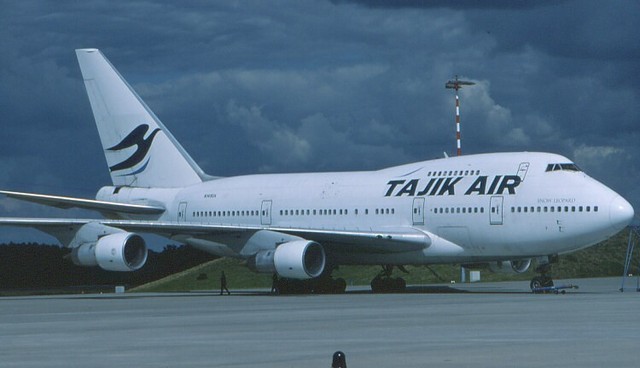
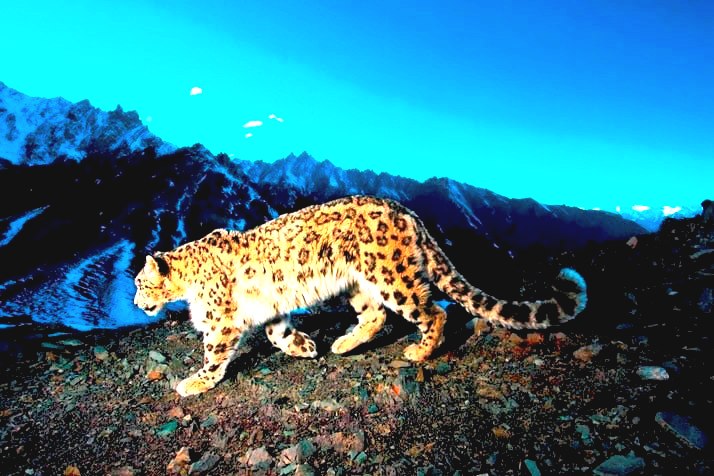
“. . .is magnificently beautiful with a major fertile valley with a mild climate that grows cotton  surrounded by majestic peaks rising 18 to 20 thousand feet and populated by their national symbol, the snow leopard. I also learned that (the capital) Dushanbe is on the old “Silk Road” route used by Marco Polo when he brought back to Italy, the secrets of making spaghetti from China. The neighboring cities of Tashkent and Samarkand conjured up images of wondrous bazaars and really old world treasures of the Mongol Empire and kabobs made from Yak. I was hooked. Like the line from the Clint Eastwood movie: “do you feel lucky?” I did. I called back and signed up”

It was the same for all the pilots who received “the call”.  A chance to be an aviation pioneer was too great an opportunity to turn down.

Once the group was assembled, refresher training was arranged at the Pan Am International Flight Academy in Miami, Florida.  The pilots were former Pan Amers and most were over 60 years of age.  While that would present a problem in the United States, it did not for Tajikistan.  And as is well known, pilots over the age of 60 have a near zero accident rate.

Pan Am International Flight Academy

Pan Am International Flight Academy

At the academy was a 747SP simulator and the pilots were put through a rigorous training program that brought them up to speed on changes to the aircraft, flight rules and also fined-tuned their instrument piloting skills.  At the same time, flight attendants from Tajik Air were undergoing training for the 747SP.  These flight attendants were supposedly the “cream of the crop” from Tajik Air but with experience limited to smaller aircraft such as the TU-154 (an old 3-engine aircraft that looked remarkably like at Boeing 727).

Lobby of Flight Academy (Photo by Priyamshah)

Lobby of Flight Academy (Photo by Priyamshah)

Simulator (Photo by Priyamshah)

Simulator
(Photo by Priyamshah)

While the pilots were progressing well in the refresher training, it was not the case for the flight attendants.

A former Pan Am purser, Gunilla Crawford, was working in contracts at the Pan Am Flight Academy when she received word that the Tajik Air flight attendants were to receive training on the 747SP.  Upon their arrival, she immediately discovered a serious problem:  their English speaking ability was extremely limited!  According to Purser Crawford:

“I had created a training program for the Tajik flight attendants and we started with the 747SP aircraft:  the doors, how to arm, disarm, open and close in normal and emergency mode. The first day was spent studying the manual; the second day in the mock- up; the third day back in the classroom.  But I soon realized it would take five days to learn the doors and it would take months to teach procedures.

 “Nothing I tried worked with the students, mainly because of the language barrier, and partly because of the size of the aircraft. The 747 SP had two aisles vs. the TU-154 single aisle; oxygen masks in the overhead on the747SP vs. two 5” tall oxygen tanks in the aft of the TU-154 cabin, held in place on the floor, standing up! (When we had a delay in Dushanbe, I went onboard and saw the difference.)”

A flight academy employee who spoke Russian eventually acted as an interpreter, but it became painfully clear that this group would not be able to staff a 747SP.  Although kind, interested and friendly, they were overwhelmed by the size of the 747SP.

This problem was not only a concern to Purser Crawford, but also to the pilots who were undergoing refresher training at the same time and who had observed the Tajik flight attendants first hand.  A solution to the problem was needed, and  according to Captain Carr, after meeting with aviation officials from Tajikistan who were present, it was decided to hire some “real” flight attendants from the former Pan Am.  Purser Crawford, was in contact with a group of “experienced and adventurous” former cabin crew colleagues, and very soon thereafter, a lot of familiar faces began appearing at the Pan Am Flight Academy.

Training went into full swing for all concerned and soon it was finished.  For the cabin crew, it was decided that two or three experienced Pan Am flight attendants would be assigned to each flight.  The remaining cabin crew positions would be filled by the Tajik Air flight attendants as “trainees”.  The goal, under the supervision and direction of the Pan Am crew, was the Tajik crew to become qualified to “staff and run” a 747SP flight.

However, there was one more thing:  Teamwork

From Captain Carr:

Being on a flight crew is a wonderful thing. It is a team effort. Pan Am had always encouraged working as a team. That teamwork was designed to save lives. Although the duties of the cabin staff are the care and feeding of passengers, their real job is to save lives in an emergency. They operate the emergency equipment and are trained to get people out of the aircraft as quickly as possible.  Good communication is essential. As a pilot, I have always appreciated and respected the job the flight attendants do and made sure they knew it”.

 In observing the training of the Tajik flight attendants, good communication was non-existent.  To alleviate this problem, Captain Carr suggested the Tajiks should see more of America other than their hotel and the flight academy and invited them and his fellow pilots to a luncheon at his home.  During the luncheon he made a very important observation:

“[At] almost any cookout in America, guests would pitch in to help with the food and drinks and have a party. Not so with the Tajiks. It became apparent that the concept of initiative did not exist in their culture. They would smile and do anything we asked of them but took no initiative. In an airplane emergency, this can be deadly so we proceeded to see what we could do about it. This was the first chance the pilots and cabin staff had the opportunity to talk in an informal setting. We encouraged them to help themselves and to pass things along to their fellow crewmembers.

 “We also started to find out why they didn’t talk to each other. They were all from Tajikistan but some were from various mountain tribes that were at odds with each other. Others were Russian, or Iranian or Tajik valley people. Apparently they had been chosen not because of their good English or flying experience but because they were related to government officials.  This was also meant to be a representative group of the Tajik population. While I thought this was a very democratic move, I later learned this diversity was meant to make it less likely that a jealous faction would [cause problems with the operation].

 “The lunch went very well and the English phrases, “more beer”, “more vodka” were pronounced much better. I also made arrangements to charter a water taxi for a cruise to see the Bahia Mar Yachting Center and also homes along the waterway.  [At the end of the tour] and before returning to Miami, the Tajiks stopped by our home to thank us. Much to my relief they were now all smiling and talking to each other and acting like a flight crew. That lunch was one of the best investments I ever made.

With the training finished and the Tajiks fresh from their team-building experience, everyone began leaving Miami for London to start the operation.  Captain Carr was asked to make the “acceptance flight” of Snow Leopard.  He accepted.

Acceptance Flight

The acceptance flight is a critical part of the delivery process of an aircraft to an airline.  Once the aircraft is accepted and delivered, anything that is discovered wrong with the aircraft becomes the responsibility of the airline.  Inspections and the acceptance flight should ensure that this does not happen.  Snow Leopard was flown to London by a United Airlines supervisory pilot and crew.  Upon arrival, Captain Carr and his crew met the aircraft and began the task of inspecting the aircraft and its logs and maintenance records and carrying out the acceptance flight.  The aircraft looked great with a fresh paint job with Tajik Air livery.  Once everything was signed off, and the walk-around inspection complete, the aircraft was pronounced airworthy and Captain Carr and his crew boarded the aircraft to begin the flight.

However, once on board, there was a surprise awaiting them:  The aircraft was full of people!  Normally such a flight involves the necessary minimum crew members.  Not this one.  The press was on board, as were Tajik Air officials, the Minister of Aviation of Tajikistan and management staff.  In fact station personnel and baggage handlers were also on board!

From Captain Carr:

“[I had] a quiet conversation with the [Minister of Aviation] to make sure that carrying all these people on a test flight was okay. I learned that wonderful Russian phrase: ‘kharasho’ (‘no problem’).  Since he was the law for our Tajikistan operating certificate, it was like getting the word directly from God. 

“I climbed into my seat in the cockpit. The United pilot looked really nervous and seemed a few shades deeper red than normal. He indicated his concern about all these people on board, and I said ‘kharasho’, took the clip board from him and signed as Pilot in Command. He looked relieved. I reminded him that United was still responsible for any maintenance items until I signed the aircraft acceptance form.  The flight went smoothly, the aircraft was perfect and everyone enjoyed the tour of the English countryside as we put the airplane through its paces. We returned to Heathrow and I made my first landing in a real 747 in about a year and a half. As we came in on final approach, I realized that we had almost all the top brass aboard, the new crewmembers and a whole planeload of people who had never been on a 747 before. 

“If you’re are flying a 747 correctly, on speed and according to ‘the book’, it normally makes a very nice landing. Once in a while, when conditions are just right and you are very lucky, the touch down is so smooth that you don’t realize you are on the ground until the speedbrake handle comes up as it automatically reacts to a microswitch on the landing gear as the wheels touch ground. This was one of those landings. 

“It is a Russian custom to applaud after a landing. But I didn’t think this applause was for landing, rather giving thanks to be alive.   However, during the flight we kept the door open for the bigwigs to view the cockpit and after landing I heard the cheers and applause from behind. Winning an Oscar for an actor couldn’t feel any better than how that landing and applause felt to me.  As we all left the aircraft my new bosses kept congratulating me as though I was the greatest pilot in the world. What could I say?  I just smiled and secretly thanked Boeing.”

Gunilla Crawford, having arrived in London to handle flight service, also had a look at Snow Leopard prior to delivery:

“The day came when we were to see the plane for the first time. It was a rainy overcast day, but there she was as beautiful as ever, sitting on the wet tarmac. We inspected the galleys, the equipment  and planned the last details, now that a few months of training and planning  had come together and the real adventure was to begin. “Starving” for flying since the demise of Pan Am . . .we were all raring to go, as this would be the “real” thing………..or so we thought.”

It was now time to get ready for operations.   Ticket sales and crew scheduling were at the top of the agenda. This and stories about some memorable flights by Snow Leopard will be coming in Part Three of the Story of Snow Leopard.

End of Part Two

The Story of Snow Leopard – Part One: The Aircraft and the Operation

Snow Leopard-2comp

6-cat-profile-714

Snow Leopard:  a moderately large cat native to the mountain ranges of Central Asia, mainly in the Pamir Mountains of Tajikistan (photograph by Steve Winter)

Part One:  The Aircraft and the Operation

The Aircraft

This is the story about an aircraft named Snow Leopard, which was a Boeing 747SP that was leased by Tajik Air, the national airline of the Republic of Tajikistan, then a newly independent former Soviet Republic located in Central Asia. The aircraft was operated exclusively on the international routes of Tajik Air and gave that airline a presence in London, UK, Delhi, India and Karachi, Pakistan.  The operation was controlled and managed by a management company in London, Tajik Air Limited.  This is what made this operation unique.  What also made it unique was that Snow Leopard was crewed by former pilots and flight attendants of Pan American World Airways, the former great airline that ceased operations in December, 1991.

The operation started with Snow Leopard’s departure from London for Dushanbe, Tajikistan in December 1993.  It ended in February 1994 when the aircraft was repossessed by United Airlines, the aircraft’s owner and lessor. What happened during these three months are stories of adventure, bravery, comedy, intrigue, loyalty and teamwork.  And they will be told in the following posts by those who were there, the pilots, flight attendants and the London management staff.

As background, the Boeing 747SP is a modified version of the Boeing 747 which was designed for ultra-long-range flights. The “SP” stands for “Special Performance”.  Compared with its predecessor, the 747-100, the 747SP retains its wide-body four-engine layout, along with its double-deck design, but has a shortened fuselage, larger vertical stabilizer, and simplified trailing edge flaps. The weight saved by the shortened fuselage permits longer range and increased speed relative to other 747 configurations.

Known during development as the short-body 747SB, the 747SP was designed to meet a 1973 joint request from Pan Am and Iran Air, who were looking for a high-capacity airliner with sufficient range to cover Pan Am’s New York–Middle Eastern routes and Iran Air’s planned Tehran–New York route. The aircraft also was intended to provide Boeing with a mid-size wide-body airliner to compete with the DC-10 and L-1011.

The 747SP first entered service with Pan Am in 1976. The aircraft was later acquired by VIP and government customers, but sales did not meet the expected 200 units, and production ultimately totaled 45 aircraft.

While in service, the 747SP set several aeronautical performance records, including three record-setting round-the-world flights, two operated by Pan Am and the third by United.

From Captain Sherman Carr, one of the former Pan Am pilots who flew Snow Leopard:

 “The airplane that was to be used for this operation was a Boeing 747SP.  * * *  The plane was originally developed for Pan Am to be able to operate non-stop from the U.S. to Hong Kong and be able to stay aloft for over 15 hours. It was actually a regular 747 with upstairs lounge seating but shortened by about 48 feet to make it lighter and additional fuel tanks for longer range. If it’s not loaded with full fuel for extended range flights, the aircraft actually scoots like a hot rod and will outperform any WWII or Korean conflict fighter aircraft and is a lot of fun to fly.  It will roll or loop or do most of the maneuvers you see at airshows but of course this is not authorized so no pilot would ever tell you he had done those things. For Dushanbe, surrounded by mountains in all directions, it was the perfect choice due to its ability to climb quickly, safely and be on its way in a timely manner and still carry about 260 people with an extended first class.”

Snow Leopard, Manufacturer’s Serial Number 21649, Serial 373 was first delivered to Pan American World Airways on May 11, 1979 registered as N540PA and named Clipper White Falcon.  It was renamed Clipper Flying Arrow on August 1, 1979 and later renamed Clipper Star of the Union on January 1, 1980. One year later, on January 1, 1981, the aircraft became China Clipper.

On February 12, 1986, as part of Pan Am’s sale of its Pacific Routes, N540PA was acquired by United Airlines.  The registration was changed to N149UA on June 1, 1986.  It was under this registration that the aircraft operated for Tajik Air, pictured below:

Snow Leopard

Snow Leopard

After the aircraft was repossessed by United Airlines, it was bought by the Brunei Government and re-registered as V8-JBB.  It was then bought by the Government of Bahrain on December 24, 1998 and registered as A9C-HMH (below, left).  Today Snow Leopard is owned by the Las Vegas Sands Corporation, registered as VQ-BMS (below, right, photo by Wong Chi Lam). She is still in operation.

747SP Bahrain Royal Flight     747SP VQ-BMS-Las-Vegas-Sands-Corporation

The Operation

Starting a new service in any market requires a great deal of research and planning.  There must be a suitable aircraft.  Government approvals must be in place.  Airport access, slots (if required), ground handling services and airport facilities (check-in desks, etc) must be obtained.  On the commercial side, the new service needs to be marketed, publicized and tickets sold.  Other details include setting up the ticket and operations offices, arranging catering, publishing an In-Flight magazine and printing safety information cards, timetables, paper tickets, baggage tickets, promotional materials and stationary.

For Tajik Air, however, there was one very important requirement missing: an operating base in London and sufficient infrastructure to crew and maintain a Boeing 747SP aircraft.  That presented a huge problem as the civil aviation structure of Tajkistan was completely inexperienced in intercontinental operations.  In fact, Tajik Air was created by the breaking-up of the Soviet Union and the then national carrier Aeroflot’s leaving of some old Russian-built aircraft (mostly TU-154s) for use by Tajik Air as the new national air carrier of Tajikistan.  Setting up a London base would seem impossible to achieve given the limited resources of Tajikistan.  However, through the foresight and creativeness of a few airline experts in London, the requirement was met.

To establish the necessary infrastructure so that Tajik Air could operate flights to/from London, a third-party UK management company, Tajik Air Limited, was formed.  Its purpose was to operate international flights on behalf of Tajik Air.  The company would obtain and maintain the aircraft and crew, organize the marketing and selling of the flights and essentially operate the flights.  This would be accomplished using Tajikistan’s Air Operator’s Certificate and Tajik Air’s call-sign and airline code.   Tajikistan committed to funding the new service and also obtaining the required government permissions for the operation.

How would this operation be viable and profitable?  The route of primary interest to Tajik Air was the London (Heathrow) (“LHR”)-Dushanbe (“DYU”) sector.  Operating that sector as an Origin-Destination route presented problems in that there was little, if any, traffic between the two points.  The question was how to fill an aircraft with 260 seats?  The answer:  Offer service between LHR and points beyond DYU.  This was to be accomplished using rights under the Sixth Freedom of the Air.

The Freedoms of the Air, established by the Chicago Conference of 1944, are a set of commercial aviation rights granting a country’s airlines the privilege of entering and landing in another country’s airspace.  The table below illustrates these Freedoms of the Air:

airfreedom

In the case of Tajik Air, the Third and Fourth Freedoms were the operative.  The former gives the “Home” (Tajikistan) country the rights to carry commercial traffic (passengers/cargo/mail, etc) to another country; the latter gives the “Home” country the rights to carry commercial traffic from that other country to home.  These rights are generally agreed-to between the “Home” country and the other country in the form of a Bilateral Agreement or an Air Services Agreement.  By using Third and Fourth Freedom rights, a Sixth Freedom operation can be created.  It is similar to a hub operation with the home country being in the middle of the operation between two different countries.

For Tajik Air, the beyond points selected were Delhi, India (“DEL”) and Karachi, Pakistan (“KHI”) due to the large number of Indians and Pakistanis living in the UK.  The schedule would work like this:  Tajik Air departs from LHR with a planeload of passengers on a Fourth Freedom flight to DYU.  Upon arrival in DYU, those few passengers destined for DYU disembark and the rest stay on board.  The flight then departs DYU with a new flight number on a Third Freedom flight for DEL or KHI.  Upon turning around in DEL/KHI, with a new planeload of passengers, the flight becomes a Fourth Freedom to DYU and from DYU, with another flight number, Third Freedom to LHR.  By operating this schedule, Tajik Air could fill the seats of Snow Leopard, and compete in a highly competitive market by offering good service with low fares.  In order to operate this schedule, Bilateral or Air Services agreements were required for scheduled traffic between Tajikistan and India/Pakistan in addition to the UK.

The published timetable shown below illustrates this operation.  Baggage tags are also shown.

Timetable Front     Timetable Inside

Baggage Tags

As outlined above, there were other details necessary for the operation.  For the aircraft, copies of the In-Flight magazine and emergency information cards were printed and are illustrated below:

Inflight Magazine0001     Inflight Magazine0002

Inflight Magazine0003     Inflight Magazine0004

Emergency Card0001comp     Emergency Card0001comp

Additionally, as part of the pre-launch publicity, an article was put in a magazine for business travelers about the new service:

LHR Mag-0001     LHR Mag-0002

For ticket sales, an office was set up in Kensington, London and a general sales agent was appointed in Karachi and Delhi.  In addition a large poster was printed for display at the ticketing offices with an image of Snow Leopard in the air:

Snow Leopard-1a-comp

The next steps in the launch of Tajik Air’s new service to London involved recruiting and training flight crews and taking delivery of the aircraft.  This will be coming in Part Two of the Story of Snow Leopard.

End of Part One